
OPTICAL SENSING TECHNIQUES FOR DETECTING EDIBLE OIL ADULTERATION: AN OVERVIEW
DOI:
https://doi.org/10.11113/jurnalteknologi.v88.24369Keywords:
Optical sensing, techniques, edible oils, adulterationAbstract
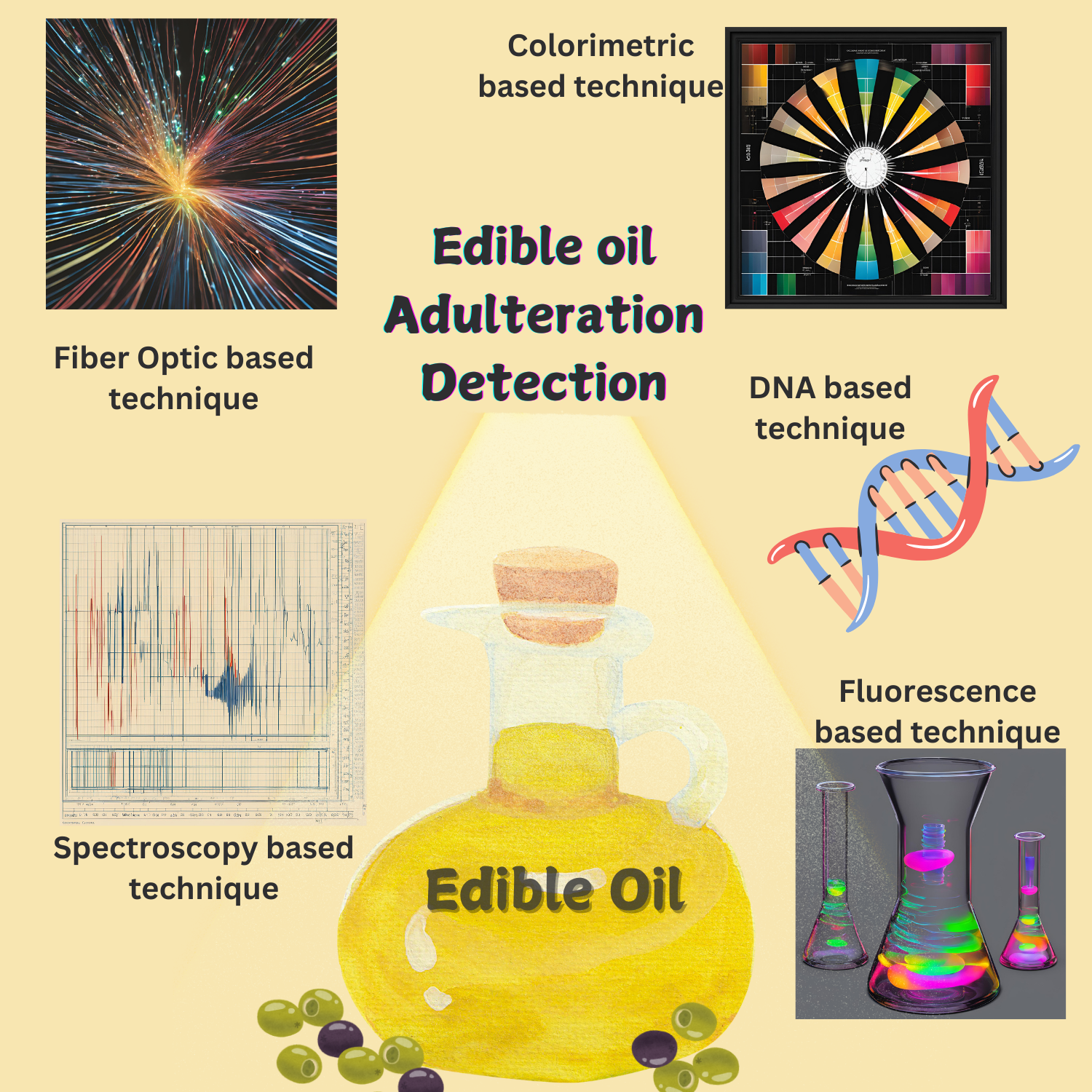
Edible oil adulteration significantly challenges food safety, nutritional quality, and consumer trust. This review explores the advancements in detection technologies, focusing on highly sensitive methods such as spectroscopy-based methods (UV-VIS, NIR, Raman, SERS), fluorescence-based methods, optical fiber sensors, and colorimetric approaches. These innovations leverage nanotechnology in optical sensing to improve the accuracy, sensitivity, and real-time applicability of adulteration detection. Spectroscopy methods like Raman and NIR offer molecular fingerprinting, while portable fluorescence and colorimetric systems provide cost-effective, on-site solutions. Despite these advances, challenges such as method standardization, affordability, and compatibility with diverse adulterants remain. The review underscores the critical role of integrating advanced sensing technologies to ensure food authenticity, enhance consumer protection, and uphold industry standards.
References
[1] Sharma, A., N. Batra, A. Garg, and A. Saxena. 2017. Food Adulteration: A Review. International Journal for Research in Applied Science & Engineering Technology (IJRASET). 5(11): 686–89. https://doi.org/10.22214/ijraset.2017.3129.
[2] Pal, M., and M. Mahinder. 2020. Food Adulteration: A Global Public Health Concern. Food and Nutrition. 1(3): 38–39. https://doi.org/10.31579/2637-8914/021.
[3] Habza-Kowalska, E., M. Grela, M. Gryzińska, and P. Listos. 2019. Molecular Techniques for Detecting Food Adulteration. Medycyna Weterynaryjna. 75(7): 404–406. https://doi.org/10.21521/mw.6261.
[4] Wen, C., M. Shen, G. Liu, X. Liu, L. Liang, Y. Li, et al. 2023. Edible Vegetable Oils from Oil Crops: Preparation, Refining, Authenticity Identification, and Application. Process Biochemistry. 124: 168–79. https://doi.org/10.1016/j.procbio.2022.11.017.
[5] Frančáková, H., E. Ivanišová, Š. Dráb, T. Krajčovič, M. Tokár, J. Mareček, and J. Musilová. 2015. Composition of Fatty Acids in Selected Vegetable Oils. Potravinarstvo Slovak Journal of Food Sciences. 9(1). https://doi.org/10.5219/556.
[6] Matthäus, B., and M. M. Özcan. 2015. Oil Content, Fatty Acid Composition, and Distributions of Vitamin-E-Active Compounds of Some Fruit Seed Oils. Antioxidants. 4(1): 124–33. https://doi.org/10.3390/antiox4010124.
[7] Malavi, D., A. Nikkhah, K. Raes, and S. Van Haute. 2023. Hyperspectral Imaging and Chemometrics for Authentication of Extra Virgin Olive Oil: A Comparative Approach with FTIR, UV–Vis, Raman, and GC–MS. Foods. 12(3): 429. https://doi.org/10.3390/foods12030429.
[8] Yang, H., and J. Irudayaraj. 2001. Comparison of Near-Infrared, Fourier Transform-Infrared, and Fourier Transform-Raman Methods for Determining Olive Pomace Oil Adulteration in Extra Virgin Olive Oil. Journal of the American Oil Chemists’ Society. 78(9): 889–95. https://doi.org/10.1007/s11746-001-0360-6.
[9] Ariza-Ortega, J. A., D. G. Castillo-Torres, E. M. Molina-Trinidad, and J. Díaz-Reyes. 2023. Evaluation of Extra Virgin Olive Oil (Olea europaea L.) Adulterated with Soybean Oil (Glycine max L. Merr.). Food Analytical Methods. 16(6): 1145–48. https://doi.org/10.1007/s12161-023-02490-9.
[10] Jabeur, H., A. Zribi, J. Makni, A. Rebai, R. Abdelhedi, and M. Bouaziz. 2014. Detection of Chemlali Extra-Virgin Olive Oil Adulteration Mixed with Soybean Oil, Corn Oil, and Sunflower Oil by Using GC and HPLC. Journal of Agricultural and Food Chemistry. 62(21): 4893–4904. https://doi.org/10.1021/jf500571n.
[11] Mendes, T. O., R. A. da Rocha, B. L. S. Porto, M. A. L. de Oliveira, V. de C. dos Anjos, and M. J. V. Bell. 2015. Quantification of Extra-Virgin Olive Oil Adulteration with Soybean Oil: A Comparative Study of NIR, MIR, and Raman Spectroscopy Associated with Chemometric Approaches. Food Analytical Methods. 8(9): 2339–46. https://doi.org/10.1007/s12161-015-0121-y.
[12] Downey, G., P. McIntyre, and A. N. Davies. 2002. Detecting and Quantifying Sunflower Oil Adulteration in Extra Virgin Olive Oils from the Eastern Mediterranean by Visible and Near-Infrared Spectroscopy. Journal of Agricultural and Food Chemistry. 50(20): 5520–25. https://doi.org/10.1021/jf0257188.
[13] Özdemir, D., and B. Öztürk. 2007. Near Infrared Spectroscopic Determination of Olive Oil Adulteration with Sunflower and Corn Oil. Journal of Food and Drug Analysis. 15(1): 40–47. https://doi.org/10.38212/2224-6614.2447.
[14] de Lima, T. K., M. Musso, and D. B. Menezes. 2020. Using Raman Spectroscopy and an Exponential Equation Approach to Detect Adulteration of Olive Oil with Rapeseed and Corn Oil. Food Chemistry. 333: 127454. https://doi.org/10.1016/j.foodchem.2020.127454.
[15] Di Girolamo, F., A. Masotti, I. Lante, M. Scapaticci, C. D. Calvano, C. Zambonin, et al. 2015. A Simple and Effective Mass Spectrometric Approach to Identify the Adulteration of the Mediterranean Diet Component Extra-Virgin Olive Oil with Corn Oil. International Journal of Molecular Sciences. 16(9): 20896–912. https://doi.org/10.3390/ijms160920896.
[16] Dulf, Francisc V., Constantin Bele, M. L. Ungureşan, and Carmen Socaciu. 2007. Qualitative and Quantitative Markers to Identify the Quality and Adulteration of Olive Oil with Rapeseed Oil. Bulletin of the University of Agricultural Sciences and Veterinary Medicine Cluj-Napoca: Agriculture. 63: 575–80. https://journals.usamvcluj.ro/index.php/agriculture/article/view/1469.
[17] Mildner-Szkudlarz, S., and H. H. Jeleń. 2010. Detection of Olive Oil Adulteration with Rapeseed and Sunflower Oils Using MOS Electronic Nose and SPME-MS. Journal of Food Quality. 33(1): 21–41. https://doi.org/10.1111/j.1745-4557.2009.00286.x.
[18] Ramos-Gómez, S., M. D. Busto, and N. Ortega. 2023. Detection of Hazelnut and Almond Adulteration in Olive Oil: An Approach by qPCR. Molecules. 28(10): 4248. https://doi.org/10.3390/molecules28104248.
[19] Nanou, E., N. Pliatsika, and S. Couris. 2023. Rapid Authentication and Detection of Olive Oil Adulteration Using Laser-Induced Breakdown Spectroscopy. Molecules. 28(24): 7960. https://doi.org/10.3390/molecules28247960.
[20] Kanwal, N., and S. G. Musharraf. 2024. Analytical Approaches for the Determination of Adulterated Animal Fats and Vegetable Oils in Food and Non-Food Samples. Food Chemistry. 140786. https://doi.org/10.1016/j.foodchem.2024.140786.
[21] Hashempour-Baltork, F., S. V. Zade, Y. Mazaheri, A. M. Alizadeh, H. Rastegar, Z. Abdian, et al. 2024. Recent Methods in Detection of Olive Oil Adulteration: State of the Art. Journal of Agriculture and Food Research. 16: 101123. https://doi.org/10.1016/j.jafr.2024.101123.
[22] Zarezadeh, M. R., M. Aboonajmi, and M. Ghasemi-Varnamkhasti. 2022. Applications of Ultrasound Techniques in Tandem with Non-Destructive Approaches for the Quality Evaluation of Edible Oils. Journal of Food Science and Technology. 59(8): 2940–50. https://doi.org/10.1007/s13197-022-05351-1.
[23] Zhou, Y., W. Zhao, Y. Lai, B. Zhang, and D. Zhang. 2020. Edible Plant Oil: Global Status, Health Issues, and Perspectives. Frontiers in Plant Science. 11: 1315. https://doi.org/10.3389/fpls.2020.01315.
[24] Perkampus, H.-H. 2013. UV–VIS Spectroscopy and Its Applications. Springer Science & Business Media.
[25] Torrecilla, J. S., E. Rojo, J. C. Domínguez, and F. Rodríguez. 2010. A Novel Method to Quantify the Adulteration of Extra Virgin Olive Oil with Low-Grade Olive Oils by UV–Vis. Journal of Agricultural and Food Chemistry. 58(3): 1679–84. https://doi.org/10.1021/jf903308u.
[26] Milanez, K. D. T. M., T. C. A. Nóbrega, D. S. Nascimento, M. Insausti, B. S. F. Band, and M. J. C. Pontes. 2017. Multivariate Modeling for Detecting Adulteration of Extra Virgin Olive Oil with Soybean Oil Using Fluorescence and UV–Vis Spectroscopies: A Preliminary Approach. LWT–Food Science and Technology. 85: 9–15. https://doi.org/10.1016/j.lwt.2017.06.060.
[27] Aenugu, H. P. R., D. S. Kumar, N. P. Srisudharson, S. Ghosh, and D. Banji. 2011. Near Infrared Spectroscopy—An Overview. International Journal of ChemTech Research. 3(2): 825–36.
[28] Wesley, I. J., R. J. Barnes, and A. E. J. McGill. 1995. Measurement of Adulteration of Olive Oils by Near-Infrared Spectroscopy. Journal of the American Oil Chemists’ Society. 72(3): 289–92. https://doi.org/10.1007/BF02541084.
[29] Melendreras, C., A. Soldado, J. M. Costa-Fernández, A. López, M. Valledor, J. C. Campo, and F. Ferrero. 2023. An Affordable NIR Spectroscopic System for Fraud Detection in Olive Oil. Sensors. 23(3): 1728. https://doi.org/10.3390/s23031728.
[30] Su, N., S. Weng, L. Wang, and T. Xu. 2021. Reflectance Spectroscopy with Multivariate Methods for Non-Destructive Discrimination of Edible Oil Adulteration. Biosensors. 11(12): 492. https://doi.org/10.3390/bios11120492.
[31] Pulassery, S., B. Abraham, N. Ajikumar, A. Munnilath, and K. Yoosaf. 2022. Rapid Iodine Value Estimation Using a Handheld Raman Spectrometer for On-Site, Reagent-Free Authentication of Edible Oils. ACS Omega. 7(11): 9164–71. https://doi.org/10.1021/acsomega.1c05123.
[32] Shipp, D. W., F. Sinjab, and I. Notingher. 2017. Raman Spectroscopy: Techniques and Applications in the Life Sciences. Advances in Optics and Photonics. 9(2): 315–428. https://doi.org/10.1364/AOP.9.000315.
[33] Kakouri, E., P. K. Revelou, C. Kanakis, D. Daferera, C. S. Pappas, and P. A. Tarantilis. 2021. Authentication of the Botanical and Geographical Origin and Detection of Adulteration of Olive Oil Using Gas Chromatography, Infrared, and Raman Spectroscopy Techniques: A Review. Foods. 10(7): 1565. https://doi.org/10.3390/foods10071565.
[34] Zou, M. Q., X. F. Zhang, X. H. Qi, H. L. Ma, Y. Dong, C. W. Liu, et al. 2009. Rapid Authentication of Olive Oil Adulteration by Raman Spectrometry. Journal of Agricultural and Food Chemistry. 57(14): 6001–6. https://doi.org/10.1021/jf900217s.
[35] Andoh, S. S., T. Nuutinen, C. Mingle, and M. Roussey. 2019. Qualitative Analysis of Sudan IV in Edible Palm Oil. Journal of the European Optical Society–Rapid Publications. 15(1). https://doi.org/10.1186/s41476-019-0117-0.
[36] Jiang, Y., M. Su, T. Yu, S. Du, L. Liao, H. Wang, et al. 2021. Quantitative Determination of Peroxide Value of Edible Oil by Algorithm-Assisted Liquid Interfacial Surface-Enhanced Raman Spectroscopy. Food Chemistry. 344: 128709. https://doi.org/10.1016/j.foodchem.2020.128709.
[37] Camerlingo, C., M. Portaccio, I. Delfino, and M. Lepore. 2019. Surface-Enhanced Raman Spectroscopy for Monitoring Extra-Virgin Olive Oil Bioactive Components. Journal of Chemistry. 2019: 9537419. https://doi.org/10.1155/2019/9537419.
[38] Moskovits, M. 2005. Surface-Enhanced Raman Spectroscopy: A Brief Retrospective. Journal of Raman Spectroscopy. 36(6–7): 485–96. https://doi.org/10.1002/jrs.1362.
[39] Libish, T. M., M. C. Bobby, J. Linesh, S. Mathew, C. Pradeep, V. P. N. Nampoori, et al. 2013. Detection of Adulteration in Virgin Olive Oil Using a Fiber Optic Long Period Grating-Based Sensor. Laser Physics. 23(4): 045112. https://doi.org/10.1088/1054-660X/23/4/045112.
[40] Liang, T. C., H. S. Huang, and M. H. Chuang. 2015. Study on Fiber Grating Sensors for Concentration Measurement of Cottonseed Oil Adulteration in Pure Olive Oil. Microelectronic Engineering. 148: 21–24. https://doi.org/10.1016/j.mee.2015.08.003.
[41] de Barros, T. H. C., H. P. Alves, L. S. C. de Miranda, A. A. D. da Silva, E. Fontana, and J. F. Martins-Filho. 2024. D-Shaped Optical Fiber-Based Refractometer for Olive Oil Adulteration Detection. Food Control. 166: 110741. https://doi.org/10.1016/j.foodcont.2024.110741.
[42] Puspita, I., N. Irawati, K. A. Madurani, F. Kurniawan, S. Koentjoro, and A. M. Hatta. 2022. Graphene- and Multi-Walled Carbon Nanotubes-Coated Tapered Plastic Optical Fiber for Detection of Lard Adulteration in Olive Oil. Photonic Sensors. 12(4). https://doi.org/10.1007/s13320-022-0652-y.
[43] Puspita, I., D. P. Banurea, R. N. Hidayati, N. Irawati, M. Marinah, A. M. Hatta, and F. Kurniawan. 2018. Detection of Lard Adulteration in Olive Oil by Using Silica Optical Fiber. In 2018 3rd International Seminar on Sensors, Instrumentation, Measurement and Metrology (ISSIMM), 30–33. IEEE. https://doi.org/10.1109/ISSIMM.2018.8727640.
[44] Supardianningsih, R. D. Panggabean, I. A. Romadhon, F. D. Laksono, U. Nofianti, and K. Abraha. 2018. Detection of Vegetable Oil Variance Using Surface Plasmon Resonance (SPR) Technique. IOP Conference Series: Materials Science and Engineering. 367(1): 012021. https://doi.org/10.1088/1757-899X/367/1/012021.
[45] Auddy, I., B. O. Madhu, S. Saravanan, A. Rawson, and C. Anandharamakrishnan. 2024. Development of Unique Signature to Define the Extent of Adulteration in Virgin Coconut Oil (VCO) by Localized Surface Plasmon Resonance (LSPR) System. Food Analytical Methods. 17(8): 1149–60. https://doi.org/10.1007/s12161-024-02632-7.
[46] Bousiakou, L. G., H. Gebavi, L. Mikac, S. Karapetis, and M. Ivanda. 2019. Surface Enhanced Raman Spectroscopy for Molecular Identification—A Review on Surface Plasmon Resonance (SPR) and Localised Surface Plasmon Resonance (LSPR) in Optical Nanobiosensing. Croatica Chemica Acta. 92(4): 479–94. https://doi.org/10.5562/cca3558.
[47] Pal, P., J. Stephen, and J. Mathew. 2025. Fiber Optic Device for the Detection of Adulteration of Olive Oil with Palm Oil. Microwave and Optical Technology Letters. 67(5): e70210. https://doi.org/10.1002/mop.70210.
[48] Willets, K. A., and R. P. Van Duyne. 2007. Localized Surface Plasmon Resonance Spectroscopy and Sensing. Annual Review of Physical Chemistry. 58: 267–97. https://doi.org/10.1146/annurev.physchem.58.032806.104607.
[49] Jameson, D. M. 2014. Introduction to Fluorescence. Taylor & Francis. https://doi.org/10.1201/b16502.
[50] Kable, S. 2019. Basic Principles of Fluorescence. In Fundamentals of Fluorescence Imaging. 1–34. Jenny Stanford Publishing. https://doi.org/10.1201/9781351129404-1.
[51] Williams, R. T., and J. W. Bridges. 1964. Fluorescence of Solutions: A Review. Journal of Clinical Pathology. 17(4): 371–94. https://doi.org/10.1136/jcp.17.4.371.
[52] Sharma, A., D. Bueno, S. Bhand, J. L. Marty, and R. Muñoz. 2018. Evaluation of Various Factors Affecting Fluorescence Emission Behavior of Ochratoxin A: Effect of pH, Solvent, and Salt Composition. Biomedical Journal of Scientific & Technical Research. 10. https://doi.org/10.26717/BJSTR.2018.10.001979.
[53] Li, Y., S. Chen, H. Chen, P. Guo, T. Li, and Q. Xu. 2020. Effect of Thermal Oxidation on Detection of Adulteration at Low Concentrations in Extra Virgin Olive Oil: Study Based on Laser-Induced Fluorescence Spectroscopy Combined with KPCA–LDA. Food Chemistry. 309: 125669. https://doi.org/10.1016/j.foodchem.2019.125669.
[54] Omwange, K. A., D. F. Al Riza, Y. Saito, T. Suzuki, Y. Ogawa, K. Shiraga, et al. 2021. Potential of Front Face Fluorescence Spectroscopy and Fluorescence Imaging in Discriminating Adulterated Extra-Virgin Olive Oil with Virgin Olive Oil. Food Control. 124: 107906. https://doi.org/10.1016/j.foodcont.2021.107906.
[55] Lastra-Mejías, M., M. Izquierdo, A. Torreblanca-Zanca, R. Aroca-Santos, J. C. Cancilla, J. E. Sepúlveda-Díaz, and J. S. Torrecilla. 2019. Cognitive Fluorescence Sensing to Monitor the Storage Conditions and Locate Adulterations of Extra Virgin Olive Oil. Food Control. 103: 48–58. https://doi.org/10.1016/j.foodcont.2019.03.033.
[56] Wang, H., and X. Wan. 2021. Effect of Chlorophyll Fluorescence Quenching on Quantitative Analysis of Adulteration in Extra Virgin Olive Oil. Spectrochimica Acta Part A: Molecular and Biomolecular Spectroscopy. 248: 119183. https://doi.org/10.1016/j.saa.2020.119183.
[57] Ma, T., H. Jiang, S. Tsuchikawa, and T. Inagaki. 2024. Development of a Time-Resolved Laser-Induced Fluorescence Fingerprinting Method for Detecting Low-Level Adulteration in Extra Virgin Olive Oil. Food Chemistry. 142125. https://doi.org/10.1016/j.foodchem.2024.142125.
[58] Hao, S., L. Zhu, R. Sui, M. Zuo, N. Luo, J. Shi, et al. 2019. Identification and Quantification of Vegetable Oil Adulteration with Waste Frying Oil by Laser-Induced Fluorescence Spectroscopy. OSA Continuum. 2(4): 1148–54. https://doi.org/10.1364/OSAC.2.001148.
[59] Farres, S., L. Srata, M. Chikri, S. Addou, and F. Fethi. 2023. Rapid Detection of Argan Oil Adulteration by Frying Oils Using Laser-Induced Fluorescence Spectroscopy Combined with Chemometrics Tools. Grasas y Aceites. 74(3): e520. https://doi.org/10.3989/gya.0565221.
[60] Uncu, O., and B. Ozen. 2019. A Comparative Study of Mid-Infrared, UV–Visible, and Fluorescence Spectroscopy in Combination with Chemometrics for the Detection of Adulteration of Fresh Olive Oils with Old Olive Oils. Food Control. 105: 209–18. https://doi.org/10.1016/j.foodcont.2019.06.013.
[61] Guimet Vila, F. 2006. Olive Oil Characterization Using Excitation-Emission Fluorescence Spectroscopy and Three-Way Methods of Analysis. PhD diss., Universitat Rovira i Virgili.
[62] Zhang, T., Y. Liu, Z. Dai, L. Cui, H. Lin, Z. Li, et al. 2022. Quantitative Detection of Extra Virgin Olive Oil Adulteration, as Opposed to Peanut and Soybean Oil, Employing LED-Induced Fluorescence Spectroscopy. Sensors. 22(3): 1227. https://doi.org/10.3390/s22031227.
[63] Vietina, M., C. Agrimonti, and N. Marmiroli. 2013. Detection of Plant Oil DNA Using High-Resolution Melting (HRM) Post-PCR Analysis: A Tool for Disclosure of Olive Oil Adulteration. Food Chemistry. 141(4): 3820–26. https://doi.org/10.1016/j.foodchem.2013.06.075.
[64] Ganopoulos, I., C. Bazakos, P. Madesis, P. Kalaitzis, and A. Tsaftaris. 2013. Barcode DNA High-Resolution Melting (Bar-HRM) Analysis as a Novel Close-Tubed and Accurate Tool for Olive Oil Forensic Use. Journal of the Science of Food and Agriculture. 93(9): 2281–86. https://doi.org/10.1002/jsfa.6040.
[65] Huang, L., M. Wang, and H. Liu. 2022. Identification of Adulterated Extra Virgin Olive Oil by Colorimetric Sensor Array. Food Analytical Methods. 15(3): 647–57. https://doi.org/10.1007/s12161-021-02141-x.
[66] Mehdizadeh, S. A., M. Noshad, M. Chaharlangi, and Y. Ampatzidis. 2023. Development of an Innovative Optoelectronic Nose for Detecting Adulteration in Quince Seed Oil. Foods. 12(23): 4350. https://doi.org/10.3390/foods12234350.
[67] Muthukumar, R., A. Kapoor, S. Balasubramanian, V. Vaishampayan, and M. Gabhane. 2021. Detection of Adulteration in Sunflower Oil Using Paper-Based Microfluidic Lab-on-a-Chip Devices. Materials Today: Proceedings. 34: 496–501. https://doi.org/10.1016/j.matpr.2020.03.099.
[68] Song, W., Z. Song, J. Vincent, H. Wang, and Z. Wang. 2020. Quantification of Extra Virgin Olive Oil Adulteration Using Smartphone Videos. Talanta. 216: 120920. https://doi.org/10.1016/j.talanta.2020.120920.
[69] Wang, H. C., Y. T. Hou, and B. C. Hsieh. 2018. Direct Photometric Assay for Copper Chlorophyll Adulterants in Edible Oil by the Aid of an Ultraviolet-Photobleaching Pretreatment. Journal of Agricultural and Food Chemistry. 66(33): 8859–63. https://doi.org/10.1021/acs.jafc.8b02170.
Downloads
Published
Issue
Section
License
Copyright of articles that appear in Jurnal Teknologi belongs exclusively to Penerbit Universiti Teknologi Malaysia (Penerbit UTM Press). This copyright covers the rights to reproduce the article, including reprints, electronic reproductions, or any other reproductions of similar nature.