
GAS SENSOR ARRAY BASED ON GRAPHENE-DOPED TIO2 FOR ACETONE VAPOR WITH DEEP NEURAL NETWORK
DOI:
https://doi.org/10.11113/jurnalteknologi.v88.24681Keywords:
VOC gases, gas classification, binder, screen printing, artificial intelligenceAbstract
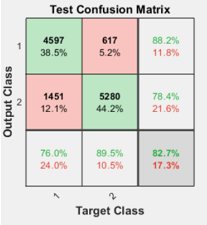
Acetone is categorized as a volatile organic compound (VOC) gas. Exposure to it for a long period harms human health and the environment. Commonly, a single sensor is used to sense the target gas. However, it always suffered from low selectivity, making it difficult to analyze and differentiate various gases. To overcome this problem, a gas sensor array is proposed in this work to investigate the response value for each array to the acetone vapor. Six sensor arrays based on various ratios of TiO2 doped with graphene were deposited using the screen-printing technique on an FR3-printed circuit board (PCB). The gas sensor arrays were exposed to two different concentrations of acetone vapor at room temperature. Next, the response values were classified using a deep neural network (DNN). The results revealed that the T95_G5 gas sensor responds more to 25 mL and 35 mL of acetone gas, with 1.0966 and 1.2074, respectively. The overall DNN accuracy for acetone vapor was 82.70%.
References
[1] Rodrigues, J., S. Jain, and N. G. Shimpi. 2023. Performance of 1D Tin (Sn) Decorated Spherical Shape ZnO Nanostructures as an Acetone Gas Sensor for Room and High Temperature. Materials Science and Engineering: B. 288: 116199. https://doi.org/10.1016/j.mseb.2022.116199.
[2] Shooshtari, M., and A. Salehi. 2022. An Electronic Nose Based on Carbon Nanotube-Titanium Dioxide Hybrid Nanostructures for Detection and Discrimination of Volatile Organic Compounds. Sensors and Actuators B: Chemical. 357: 131418. https://doi.org/10.1016/j.snb.2022.131418.
[3] Yan, H., and Y. G. Zhou. 2022. Electrical Sensing of Volatile Organic Compounds in Exhaled Breath for Disease Diagnosis. Current Opinion in Electrochemistry. 33: 100922. https://doi.org/10.1016/j.coelec.2021.100922.
[4] Wan, G., R. Xue, T. Qin, F. Zhang, and Y. Li. 2023. Acetone Detection at Low Temperature Using a Gas Nano-Sensor Based on ZnO Flakes Loaded with Metal Organic-Skeleton ZIF-8. Materials Today Communications. 37: 107561. https://doi.org/10.1016/j.mtcomm.2023.107561.
[5] Van Duy, N., et al. 2022. Design and Fabrication of Effective Gradient Temperature Sensor Array Based on Bilayer SnO₂/Pt for Gas Classification. Sensors and Actuators B: Chemical. 351: 130979. https://doi.org/10.1016/j.snb.2021.130979.
[6] Yong, K., L. Su, H. Liu, C. Xu, and H. Zhang. 2025. Co₃O₄/SnO₂ Heterojunctions Formed as Porous Nanocubes with Remarkable Sensitivity and Selectivity to Acetone Gas. Materials Letters. 384: 138118. https://doi.org/10.1016/j.matlet.2025.138118.
[7] Chen, Y., et al. 2022. Highly Sensitive and Selective Acetone Gas Sensors Based on Modified ZnO Nanomaterials. Materials Science in Semiconductor Processing. 148: 106807. https://doi.org/10.1016/j.mssp.2022.106807.
[8] Chandak, V. S., M. B. Kumbhar, and P. M. Kulal. 2024. Highly Sensitive and Selective Acetone Gas Sensor-Based La-Doped ZnO Nanostructured Thin Film. Materials Letters. 357: 135747. https://doi.org/10.1016/j.matlet.2023.135747.
[9] Haidry, A. A., Y. Wang, Y. Weng, A. Raza, and K. Yusuf. 2025. Excellent Acetone Sensing Enabled by Tunable Metal Organic Framework Derived TiO₂ Nanodisks. Talanta. 287: 127547. https://doi.org/10.1016/j.talanta.2025.127547.
[10] Liu, X., E. Cao, Y. Zhang, Y. Tian, L. Sun, and B. Sun. 2024. Ni-TiO₂ Nanotube Arrays for Highly Sensitive and Selective Detection of Acetone Vapor. Materials Letters. 355: 135526. https://doi.org/10.1016/j.matlet.2023.135526.
[11] Oh, J., et al. 2022. Machine Learning-Based Discrimination of Indoor Pollutants Using an Oxide Gas Sensor Array: High Endurance Against Ambient Humidity and Temperature. Sensors and Actuators B: Chemical. 364: 131894. https://doi.org/10.1016/j.snb.2022.131894.
[12] Lyu, L., et al. 2022. A Novel CeO₂ Hollow-Shell Sensor Constructed for High Sensitivity of Acetone Gas Detection. Applied Surface Science. 571: 151337. https://doi.org/10.1016/j.apsusc.2021.151337.
[13] Li, C., P. G. Choi, K. Kim, and Y. Masuda. 2022. High Performance Acetone Gas Sensor Based on Ultrathin Porous NiO Nanosheet. Sensors and Actuators B: Chemical. 367: 132143. https://doi.org/10.1016/j.snb.2022.132143.
[14] Shi, C., et al. 2024. Vertically Aligned Mesoporous Ce-Doped NiO Nanowalls with Multilevel Gas Channels for High-Performance Acetone Gas Sensors. Sensors and Actuators B: Chemical. 401: 134888. https://doi.org/10.1016/j.snb.2023.134888.
[15] Guo, Y. Y., X. H. Zheng, L. B. Bo, Z. Q. Gu, C. Zhang, and Y. F. Liu. 2025. UV-Activated Gas Sensor Based on Ordered Mesoporous ZnO–TiO₂ Heterogeneous Composites for Trace NO₂ Detection at Room Temperature. Talanta. 285: 127415. https://doi.org/10.1016/j.talanta.2024.127415.
[16] Vijaykumar, A., A. Mondal, S. Deb, B. Ajitha, and Y. A. K. Reddy. 2024. Development of Room-Temperature Operable TiO₂−x-Based Hydrogen Gas Sensor with Light Irradiation. Applied Surface Science. 670: 160664. https://doi.org/10.1016/j.apsusc.2024.160664.
[17] Chang, Y. S., M. C. Cheng, D. C. Tsai, and F. S. Shieu. 2024. Silver Nanowires@TiO₂ Core-Shell for Room-Temperature 1000 ppm NH₃ Gas Sensors. Journal of Materials Research and Technology. 31: 3079–3089. https://doi.org/10.1016/j.jmrt.2024.07.022.
[18] Liu, Q., S. Fan, L. Fu, C. Liu, J. Xu, and W. Tang. 2023. Carbon Quantum Dot Modified Electrospun TiO₂ Nanofibers for Flexible Formaldehyde Gas Sensor under UV Illumination at Room Temperature. Diamond and Related Materials. 140: 110542. https://doi.org/10.1016/j.diamond.2023.110542.
[19] Kim, J. Y., S. P. Bharath, A. Mirzaei, S. S. Kim, and H. W. Kim. 2023. Identification of Gas Mixtures Using Gold-Decorated Metal Oxide Based Sensor Arrays and Neural Networks. Sensors and Actuators B: Chemical. 386: 133767. https://doi.org/10.1016/j.snb.2023.133767.
[20] Peña, Á., et al. 2023. Optimization of Multilayer Graphene-Based Gas Sensors by Ultraviolet Photoactivation. Applied Surface Science. 610: 155393. https://doi.org/10.1016/j.apsusc.2022.155393.
[21] Sangeetha, M., and D. Madhan. 2020. Ultra Sensitive Molybdenum Disulfide (MoS₂)/Graphene Based Hybrid Sensor for the Detection of NO₂ and Formaldehyde Gases by Fiber Optic Clad Modified Method. Optics & Laser Technology. 127: 106193. https://doi.org/10.1016/j.optlastec.2020.106193.
[22] Li, Y., Y. Xu, and X. Li. 2022. The Sensing Mechanism of HCHO Gas Sensor Based on Transition Metal Doped Graphene: Insights from DFT Study. Sensors and Actuators A: Physical. 338: 113460. https://doi.org/10.1016/j.sna.2022.113460.
[23] Chen, Z., J. Wang, and Y. Wang. 2021. Strategies for the Performance Enhancement of Graphene-Based Gas Sensors: A Review. Talanta. 235: 122745. https://doi.org/10.1016/j.talanta.2021.122745.
[24] Wang, C., Y. Wang, Z. Yang, and N. Hu. 2021. Review of Recent Progress on Graphene-Based Composite Gas Sensors. Ceramics International. 47(12): 16367–16384. https://doi.org/10.1016/j.ceramint.2021.02.144.
[25] Zhang, J., et al. 2021. A Miniaturized Electronic Nose with Artificial Neural Network for Anti-Interference Detection of Mixed Indoor Hazardous Gases. Sensors and Actuators B: Chemical. 326: 128822. https://doi.org/10.1016/j.snb.2020.128822.
[26] Park, J., et al. 2021. Optical Bioelectronic Nose of Outstanding Sensitivity and Selectivity toward Volatile Organic Compounds Implemented with Genetically Engineered Bacteriophage: Integrated Study of Multi-Scale Computational Prediction and Experimental Validation. Biosensors and Bioelectronics. 177: 112979. https://doi.org/10.1016/j.bios.2021.112979.
[27] Acharyya, S., P. K. Bhowmick, and P. K. Guha. 2023. Selective Identification and Quantification of VOCs Using Metal Nanoparticles Decorated SnO₂ Hollow-Spheres Based Sensor Array and Machine Learning. Journal of Alloys and Compounds. 968: 171891. https://doi.org/10.1016/j.jallcom.2023.171891.
[28] Faleh, R., and A. Kachouri. 2023. A Hybrid Deep Convolutional Neural Network-Based Electronic Nose for Pollution Detection Purposes. Chemometrics and Intelligent Laboratory Systems. 237: 104825. https://doi.org/10.1016/j.chemolab.2023.104825.
[29] Wang, Y., Y. Jiang, H. Hao, B. Yu, J. Li, and S. Zhou. 2022. Pressure Calibration- and Profile Fitting-Free Spectroscopy Technology Based on Deep Neural Network for Gas Sensing. Measurement. 204: 112077. https://doi.org/10.1016/j.measurement.2022.112077.
[30] Nnabuife, S. Godfrey, B. Kuang, J. F. Whidborne, and Z. Rana. 2021. Non-Intrusive Classification of Gas-Liquid Flow Regimes in an S-Shaped Pipeline Riser Using a Doppler Ultrasonic Sensor and Deep Neural Networks. Chemical Engineering Journal. 403: 126401. https://doi.org/10.1016/j.cej.2020.126401.
[31] Mohd Chachuli, S. A., et al. 2024. Effects of Silver Diffusement on TiO₂–B₂O₃ Nanocomposite Sensor towards Hydrogen Sensing. Materials Research Innovations. 1–14. https://doi.org/10.1080/14328917.2024.2304480.
[32] Chachuli, S. A. M., N. A. Muhammad 'Azmi, N. H. Shamsudin, O. Coban, and S. A. C. Aziz. 2025. Impact of Chitosan as a Binder in Graphene Gas Sensor for Volatile Organic Compound Detection. ChemistrySelect. 10(4): 1–14. https://doi.org/10.1002/slct.202405111.
[33] Chu, J., et al. 2021. Identification of Gas Mixtures via Sensor Array Combining with Neural Networks. Sensors and Actuators B: Chemical. 329: 129090. https://doi.org/10.1016/j.snb.2020.129090.
[34] Chen, X., Q. Xing, X. Tang, Y. Cai, and M. Zhang. 2024. Machine Learning Algorithm Assisted Cerium Oxide Based High Selectivity Acetone Sensor. Ceramics International. 50(21PA): 41770–41779. https://doi.org/10.1016/j.ceramint.2024.08.030.
[35] Wang, B., et al. 2023. Artificial Olfaction Based on Tafel Curve for Quantitative Detection of Acetone Ethanol Gas Mixture. Sensors and Actuators B: Chemical. 377: 133049. https://doi.org/10.1016/j.snb.2022.133049.
[36] Sohn, I., et al. 2025. Selective Denoising Autoencoder for Classification of Noisy Gas Mixtures Using 2D Transition Metal Dichalcogenides. Talanta. 283: 127129. https://doi.org/10.1016/j.talanta.2024.127129.
[37] Wang, Z., et al. 2024. Improved Deep Bidirectional Recurrent Neural Network for Learning the Cross-Sensitivity Rules of Gas Sensor Array. Sensors and Actuators B: Chemical. 401: 134996. https://doi.org/10.1016/j.snb.2023.134996.
Downloads
Published
Issue
Section
License
Copyright of articles that appear in Jurnal Teknologi belongs exclusively to Penerbit Universiti Teknologi Malaysia (Penerbit UTM Press). This copyright covers the rights to reproduce the article, including reprints, electronic reproductions, or any other reproductions of similar nature.